Thursday, 31 January 2013

Tracey Emin

Biography


Tracey Emin’s art is one of disclosure, using her life events as inspiration for works ranging from painting, drawing, video and installation, to photography, needlework and sculpture. Emin reveals her hopes, humiliations, failures and successes in candid and, at times, excoriating work that is frequently both tragic and humorous.
Emin’s work has an immediacy and often sexually provocative attitude that firmly locates her oeuvre within the tradition of feminist discourse. By re-appropriating conventional handicraft techniques – or ‘women’s work’ – for radical intentions, Emin’s work resonates with the feminist tenets of the ‘personal as political’. In Everyone I’ve Ever Slept With, Emin used the process of appliqué to inscribe the names of lovers, friends and family within a small tent, into which the viewer had to crawl inside, becoming both voyeur and confidante. Her interest in the work of Edvard Munch and Egon Schiele particularly inform Emin’s paintings, monoprints and drawings, which explore complex personal states and ideas of self-representation through manifestly expressionist styles and themes.
Tracey Emin was born in London in 1963, and studied at Maidstone College of Art and the Royal College of Art, London. She has exhibited extensively internationally including solo and group exhibitions in Holland, Germany, Japan, Australia and America. In 2007 Emin represented Britain at the 52nd Venice Biennale, was made a Royal Academician and was awarded an Honorary Doctorate from the Royal College of Art, London, and a Doctor of Letters from the University of Kent and Doctor of Philosophy from London Metropolitan University. During the Edinburgh Festival in 2008, Emin’s survey exhibition ’20 Years’ opened at the Scottish National Gallery of Modern Art and then toured on to Centro de Arte Contemporáneo de Málaga, Spain and the Kunstmuseum Bern, Switzerland (March 19th – June 21st 2009). In May 2011, Emin had a major solo exhibition at the Hayward, London. Emin currently lives and works in London.


This was taken from Emins website. I have highlighted some of the things i have found interesting upon reading this brief biography of Emins influences. I am most intruiged by her bed piece and as an installation i like how rare it is and how it displays such personal items which create effects which stick with a viewer. She uses items and objects to reflect and express emotions and feelings she gains from personal life experiences. She reveals the truth without skipping over detail, which works strongly amoungst her feminist angles on provocative attitudes.
Using objects to portray autobiography is something i am going to take through the installation subject.

Autobiographical work

Yesterday, we began exploring the idea of using autobiography in work in the first of a series of installation workshops. I have taken some notes from the opening presentation.
 
Cave Of Hands
 
Cueva de las Manos (Spanish for Cave of the Hands) is a cave or a series of caves located in the province of Santa Cruz, Argentina, 163 km (101 mi) south of the town of Perito Moreno. It is famous (and gets its name) for the paintings of hands. The art in the cave dates from 13,000 to 9,000 years ago.
 
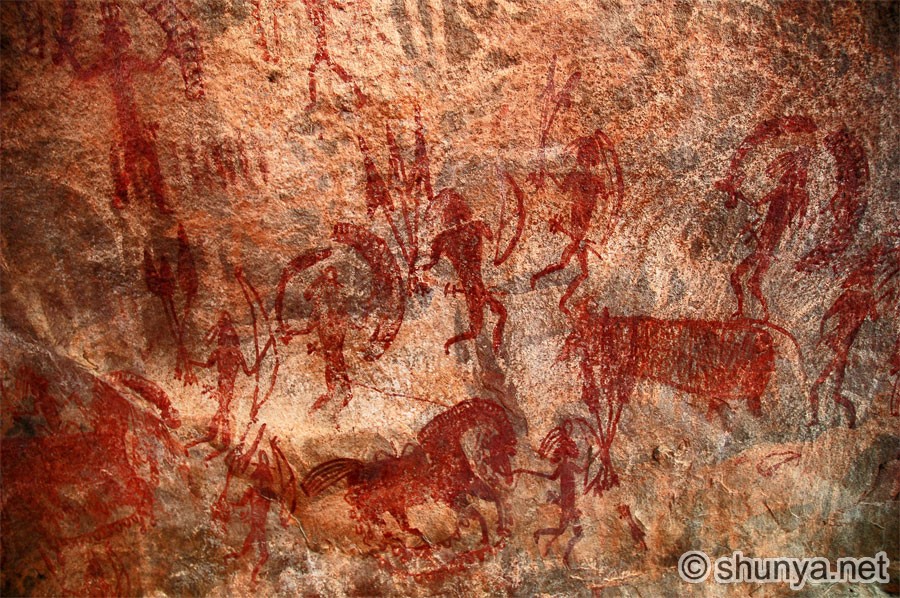
Bhimbetica Rock Shelters
The rock shelters and caves of Bhimbetka have a number of interesting paintings which depict the lives and times of the people who lived in the caves, including scenes of childbirth, communal dancing and drinking, and religious rites and burials, as well as the natural environment around them.
 
 Jan Van Euck, Albrecht Durer, Da Vinci

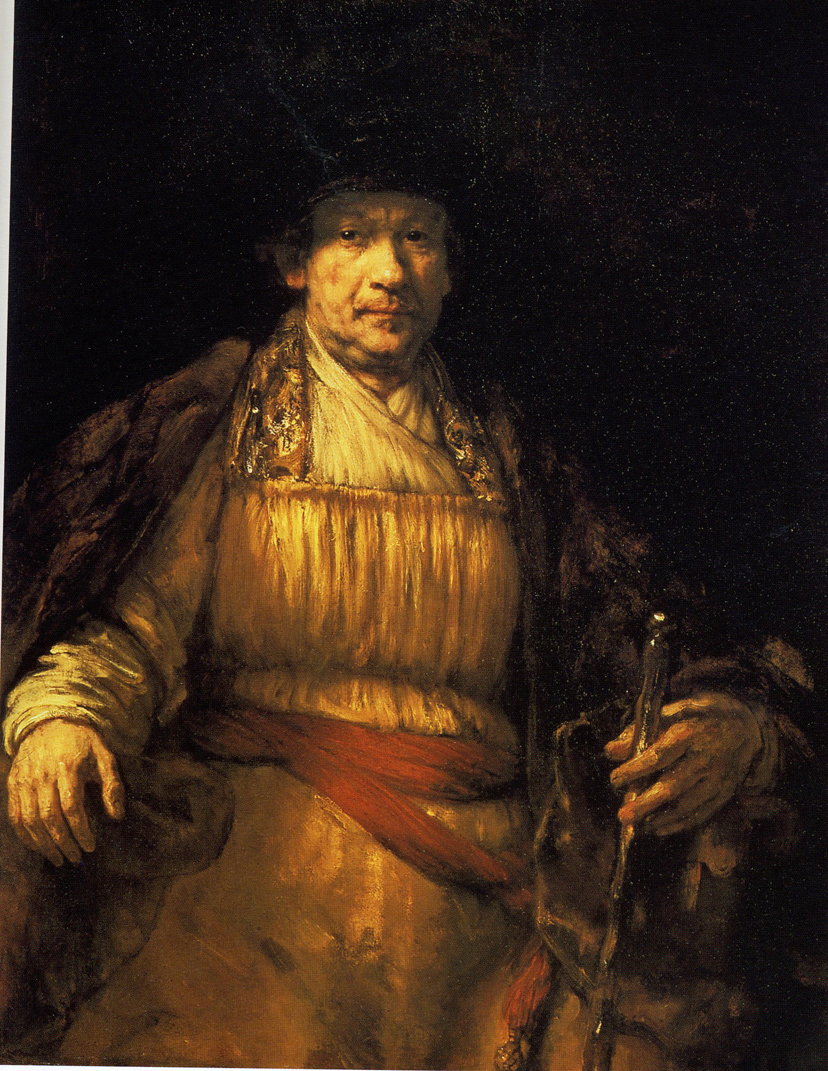
Rembrandt van Rijn

No artist has left a loftier or more penetrating personal testament than Rembrandt van Rijn. In more than 90 portraits of himself that date from the outset of his career in the 1620s to the year of his death in 1669, he created an autobiography in art that is the equal of the finest ever produced in literature even of the intimately analytical Confessions of St. Augustine.


Frida Kahlo, Tracey Emin


The presentation explored autobiography through time and that it can take many forms, its not the obvious which is always the most intruiging but self portraiture tells a lot about an artists life. It can take the form of portraiture, diary, the avante garde movements, performance art, documentary and self presentation through the 'big brother culture' and the facebook/social media revolution. But also why autobiographical work? it could be a record of life or work, a platform for societies minorities (the feminist artists use self expression a lot in work to get points across), it may be to remember or establish existence. Re-presentation is also a big thing with autobiographical work and this is something post-modernism is displaying through things such as parody in film.

Self Portraits - The Me Generation

I am watching the last in a three part series shown on channel 4 in 2005. The titles go from Togetherness to Loneliness and end in Shattered, they explore self portraiture from the renaissance to a more present time.
These are notes (and some information found from the internet to support) from the final episode which i borrowed from the library, in which art critic Mathew Collings concludes his scrutiny of self-portraits with a look at female artists including Cindy Sherman, Sarah Lucas and, in particular, Frida Kahlo (amongst mention of others).

Frida Kahlo
Traffic Accident, bus crash, empayled her on a hand rail, shattered spine
Mexican Artist, pursued Diego Riviera and married him, she 22 he 33 she middle class 3 years before mexican revolution. Created a persona to display, started dressing in costume in 'mexicanism' and combined the old with the new. In 1931 Kahlo experienced painful miscarriges and created art pieces. She shows the pain of life in a simple way, there is a magical element. Literal art, paints a death mask and diago on her head because they may be on her mind. Pain, passion, colourful paintings.
Picasso and surrealists impressed with Kahlos work, she wasn't keen on surrealists when she was invited to do a show with them. She said her self portraits were not 'surrealist dreams' but her reality.
Her life had been incredibly vivid, she had affairs with men and women, and had a lot of drink and drugs. Was in constant pain because of her spine. 'A beatiful wreck' 'The Blue House'. She became Violent and Crazed as she grew older, now she is seen as a saint of the 'me' generation.

Artemisia Gentileschi
raped at the age of 14, had to work in rigid conditions, helpless to display her true feelings because of the time.

Sarah Lucas
Lucas staging a modern female self 

Tracey Emin??
Tracey Karima Emin, CBE, RA (born 3 July 1963 in Croydon) is an English artist. She is part of the group known as Britartists or YBAs (Young British Artists).
In 1997 her work Everyone I Have Ever Slept With 1963–1995, a tent appliquéd with names, was shown at Charles Saatchi's Sensation exhibition held at the Royal Academy in London. The same year, she gained considerable media exposure when she appeared drunk and swearing on a live Channel 4 TV discussion.
In 1999 she was a Turner Prize nominee and exhibited My Bed — an installation, consisting of her own unmade dirty bed with used condoms and blood-stained underwear.

Cindy Sherman
Charades of self hood.  Film Stills. Disguises of her older self, ageing bodies 'must be disguised' in the media, Sherman makes a slight mockery of this.

Alice Neale
Self portrait aged 81, she died 4 years later. She had nervous breakdowns and tried to commit suicide as a young painter. She experienced a child's death, drug user partners. she said 'as an artist she had always been a collector of souls'. 

Sam Taylor Wood

Sam Taylor-Wood (British, b.1967) is a photographer and filmmaker, considered a member of the group known as the Young British Artists. After beginning to exhibit fine art photography in the early 1990s, Taylor-Wood had her first solo exhibition in 1994. For her series of photographs titled Five Revolutionary Seconds, started in 1995, Taylor-Wood used a rotating camera to take five-second shots while capturing a full 360-degree panorama. The resulting photographs are often over six feet in length, and depict various settings and characters. Despite their physical proximity, the figures appear distant and detached from each other, presumably lost among their own internal thoughts.

Port modernist art, truth changes due to context. Nothing is believable.

After viewing this documentary, i feel i have gained more knowledge about how the 'self' has changed over time and how figures such as Frida Kahlo have used their life experiences and how society may accept or not accept their choices. It is this i will take through the next couple of weeks of my project to guide some possible outcomes and experiments.

Friday, 25 January 2013

Sarah Lucas

Self-portrait with Fried Eggs 1996 C-print 167 x 119 cm 65¾ x 47"

Sarah Lucas emerged as part of a group of a young british artist movement in the 1990's, she studied at Goldsmiths College.  Her works are made up of found objects, collage, photography and are based on visual puns. This is a self portrait print featuring Lucas on a chair with two fried eggs on top of her clothes where her breasts are. She is sitting in what society would pronounce a 'masculine' way with her legs open and isn't wearing any makeup or provocative clothing, highlighting her  determination to remain angrogynous.
The piece seems very bold, highlighted by the visually blocked monochrome floor tiles. The composition of the photograph looks quite stereotypically 80's or 90's because of the furniture and how she is dressed. There is an ash tray and cigarette packet on the floor and the eggs are the only  thing which look out of place.

Found in the national portrait gallery, Lucas has a collection of twelve iconic self-portraiture photographs where she explores the identity of herself as a female. She uses these 'masculine' poses to highlight her puns and challenge stereotypes of sexuality. I am predicting any self portrature photographs taken by my female close family and friends will be subjected to what looks 'beautiful' or 'sexy', and if it is i may then attempt to play with puns myself on top of the photographs through collage/paint, which may then result in works which look more like those of Judy Chicago. On the other hand if i use digital photography and highlight the images i could capture some of the stereotypes similarly to Cindy Sherman.


Sarah Lucas (B. 1962)
Great Dates
photocopy, collage, paint and photography on masonite.
88 x 56in. (223.5 x 143.5cm.)

This collage is made by Sarah Lucas. It features the artist herself eating a banana and wearing a leather jacket, possibly highlighting her androgynous nature and need to remain this way. With the rest of the piece featuring female nudes and sexualised imagery, it is hard not to take her pose and put in in a provocative concept.  Due to her feminist nature, this juxtaposition was no doubt her aim for the piece to provoke audience reaction and bite back at the representation of women in the media.
After researching the piece, I came across this quote.

'With only minor adjustments, a provocative image can become confrontational converted from an offer of sexual service into a castration image.' The minor adjustments Lucas may be referring too here are pages from 'The Sunday Sport' newspaper, collaged onto board, which form the backdrop to this act of feminism. Taken straight from the news stand, the pictures of naked women show how the idea of objectifying women as a sexual toy has become every day and put them together to show how demeaning they are to every day women.

‘’I don't take pornography as my subject; I take the acceptable stuff available at 25p - common currency, rather than the deviant or marginal,' Lucas explains." (S. Kent, 'Young British Artists II', London 1993).
These images are the ones I am currently using in my own images, and this work by Sarah Lucas has influenced the reasons why. Because these are the representations we see on a daily basis and are deemed ‘acceptable’ when they are clearly not, porn is porn and objectifies on an entirely new level, however, it is these daily stereotypes of the naked woman shown in every day newspapers that need to be re-assessed by everyone who may simply flick past them.

Cindy Sherman

I have decided to look at and research the work of Cindy Sherman. Although it is difficult for me to gain primary research, i will be using secondary techniques to create some background information on what has made Sherman so well known. I have discovered some books and DVDs in the library which i am intending on watching and reading to gain knowledge and understand the process from thought to outcome.
Sherman is a famous american photographer and film director (Office Killer, 1998). She is known to turn the camera on herself, specifically in her untitled film still collection (1977–1980), which is a collection consisting of 69 photographs featuring Sherman in different settings and poses. The images are mostly black and white and are stereotypical of stills from Italian neorealism or American film noir of the 1940s, 1950s and 1960s inparticular.
The first six in the collection are said to be slightly out of focus, for example Untitled #4 (left). When i saw this imagine i immediately related it to the hetrosexual male gaze. The image also had been positioned so we see the figure first. It is the dominant part of the image. Each of these first few in the collection appear to be played by the same blonde actress. The collection goes on to display images shot in 1978 at her partner at the time (Robert Longo's) family beach house. Later in the year sherman took her photography from her apartment towards the city. Film Still #21 demonstrates this (below right).
It wasn't until around a year later Sherman took her stills back to her apartment and created a version of a character from the film 'two women' (still #35). Whilst on a road trip to Arizona with her parents, in untitled film still #48 was taken by her father at sunset. The last of the series were taken in New York and are much more played by the stereotypcial noir blonde character. The series ended in the December of 1995 when it is claimed Sherman 'ran out of cliches'. Selling for an estimated £1 million.

This series of stills create a story, not autobiograpical, however they still leave a prospective viewer with a slight hint of who Cindy Sherman is and what she is trying to portray. They are self-portraiture and support a lot of the male gaze theories which i have looked at in previous projects. It is the stereotypes in the film industry past and present which led Shermans work and similarly i am intending my work to represent the different effects the media has had on my female family and friends. Judy Chicago's autobiography of a year piece would look really effective done in the style of Cindy Shermans stills. This is something i am intending on trying over the next week personally, i could then attempt to get a few of my sisters/mum/stepmum/friends (depending who is willing) to do a similar thing as a starting point. I will go back and reference Cindy Sherman later in my work.

Thursday, 24 January 2013

Statement Of Intent


During the past three units, i have lacked the ability to stop myself from pre-conceptions in terms of artist research. This is the main progress i am hoping to take onto the next project, i need to become more able to research before deciding how i am inspired, as opposed to using my influences to choose artists. I feel i need to be able to comment on work i may not connect with alongside the pieces i do. I will need to learn to produce imagery and responses based on theory (contextual or other).

I have applied to study Arts and Wellbeing, in an attempt to gain experience leading towards a career in the community art sector, particularly art therapy. My interest in psychology has led most of my projects and i am intending on taking the word 'self' and using it as an approach for this project on to how others see themselves, as opposed to how i see myself (this led a lot of my previous briefs). My source materials will come from gallery and museum trips, artist research on feminist art and potentially some others less related so i don't close my options too much. I will do primary drawings and observations from these images.

As a start, I will be attempting to collect old family photographs which demonstrate my sisters and i. Its our experiences and how we have dealt with them that has shaped us into different characters and i find it very interesting. Its something that has a lot of personal depth for me and i am able to work my advantages with availability for research to well defined outcomes. However, i am not afraid to branch into a different angle on the brief if i feel the need to gain depth or substance which may come more from the media effects on the objectification of women than my own sisters and i.

I have previously explored a range of feminist artists and would like to continue my research from these, whilst asking peers and tutors and visiting museums and galleries to find new artists who i have yet to explore and discover. Hopefully these will influence and inspire maximum experimentation and outcomes.

Ben Uri Gallery

Ben Uri Gallery

The Current exhibition..

Judy Chicago and Louise Bourgeois,
Helen Chadwick, Tracey Emin
A Transatlantic dialogue
14 November 2012 - 10 March 2013


The exhibition presents a unique perspective on the work of Judy chicago, it demonstrates major iconic themes through her work (including autobiography, art as a diary, erotica, feminism, self-portraiture, birth and cats.) Most of the pieces come in the form of paper, however they do address a range of media which come from painting, printing, drawing, photography, film, perfomance and some textile work. It is different from some of her other works because it displays a lot more intimate work, unfamiliar to the public.


These images come from Judy Chicago's 'Autobiography Of A Year'. This exhibition sees Judy Chicago exhibiting in London for the first time since 1985. I saw this autobiographical piece as a stepping stone for influence. There are in total 140 of these small pieces of expression of the year 1993-94. My theme of female psychology will work really well and the story behind the piece i found similar to the atmospheric narrative of the Doctors, Dissection and Resurrection Men exhibition. The sequence of a year creates an active audience which makes the entire piece much more relateable and honest. I like how bare the piece is and how it uses irony and sarcasm which a lot of feminist art does. I am intending on going further with Judy Chicago as an artist as her other works in the exhibition were equally interesting for me. Also, i had never really considered the triangular shapes in some of her other work which links quite closely to previous projects i have completed where i have used the triangle form in relation to the female form and body parts. In the below interview, when speaking about this piece she says she wanted to go against her usually transformed work. She says how she wanted to use motive, direct, uncenscored immediacy within the piece.


Judy was born Judy Cohen to a Jewish family in 1939. The death of her father along with the empowering of the individual aspiration she was forced to cope with led her to become Chicago. Her talent was struck when she took part in art classes at the Art Institute of Chicago at the age of five. Her name wasn't legally changed until 1970 when she finally liberated herself from the percieved male dominance. Her combined talents, experiences, views, visions, opinions and courage led her to becoming such an influential, daring, controversial feminist artist.
'The Dinner Party' (1979) has been on permanent display at the Brooklyn museum since 2007. It is recognised as ground-breaking feminist art piece, supporting the movement and becoming an icon of this along with twentieth century American art history. I will look more in depth at this piece as my project and influences develop.

Museum Of London And The Wellcome Institute Trips

Museum of London

Although not particularly relevent to my themes and ideas for this piece, i was very interested by the uneasy feel i receieved when visiting the Doctors, Dissection and Resurrection Men exhibition. As well as being visually inspiring, the sequence of the pieces flowed into a story, i was encaptured by the information and history being fed to me and this made a subject i haven't ever really shown interest in come to life. I took more from the atmosphere and presentation of each piece. Each one had a story to tell and this is something i will take on board for how to grip and entice with my pieces for my project.


The Wellcome Institute, Euston

At The Wellcome Insitute, i visited two exhibitions. One being 'Death: A self-portrait,' the other permanent collection  'Medicine Man'. Again, these works were not very relevant to my project themes so i took influence and interest from the many types of media and the form the artists used to create works. In particular, Dana Salvo's collection of chromogenic prints i found visually stunning. This is something i would like to research within materials and processes, because it looked very clean compared to some of the work i have previously produced and this is something i always strive to achieve. 
This is a photograph of one of the prints from the series, 'The Day, the night and the Dead' (1990-2004)(courtesy Clark Gallery).The collection explores the ancient mexican celebration of the day of the dead. They include 'altars' which are known as offerings to spirits of those who have departed. They include photographs of those deceased, along with a persons personal items and favourite foods or drinks. This may relate in some ways to my project as these factors can combine to create an idea of personality through symbolism. Marigolds are believed to lead the dead to the altar through their strong colour and scent.

Thursday, 17 January 2013

Experiments and Artists

I think i would like to take my work further and go away from how i see myself and looks more about how those close to me see themselves. I think i would like to gain some substance from interviewing my female friends and family members about how they feel about their bodies and if they think they fit in with what would be classed as appealing to the eyes of the male gaze. I then could potentially try to get them to create something which displays how they feel towards it without having to use words, as this may be too difficult and they may not be as honest as i would like. I am trying to keep a close link with psychology and art because i would like to get into art therapy in the future.

Wednesday, 16 January 2013

Research Collecting

I am intending on finding as much primary and secondary research as possible, as long as it is loosely related it is worth visiting. Primary research may come from visiting galleries and creating quick drawings with a range of materials and resources straight from the piece. Also, if i manage to seek an opportunity to gain any newspaper articles, literature or maybe even get an interview with an artist it will be primary. It depends a lot on who i am looking at and the circumstances, i.e if they are still living or particularly famous. In terms of gaining secondary research, I am intending on using the library at college as this has been a useful resource for me in previous projects, the internet i will use as a last resort for information. In terms of contextual research i will be able to use myself as a source for this project, or potentially somebody close to me and see how they see 'self'. After primarily seeing how my chosen artists work, if it influences me in terms of materials and processes i will ensure i have researched through asking professionals or people with experience, and then in turn applying what i can learn from using them and helpful tips from helpful books.

Self Initial Mind Map

What I have/haven't achieved in previous tasks


Throughout the past three units I have managed to gather together creative intentions and ideas with regards to themes. They have been personal to me and my morals and I have looked at a few artists whose work inspires me emotionally as well as visually. This is very important to me and something I would like to transfer onto my next projects. I would, however, like to look at a wider range of artists who have created works I feel I could respond to in my own final pieces. I now need to transfer what I have learnt and work out ways to produce imagery based on theory.

Self Brief Introduction


4:Personal Preparation and Progression in Art, Design and Media (part unit)
5:Information and Interpretation in Art, Design and Media
6:Combined Experimental Studies in Art, Design and Media
7:Media Development in Art, Design and Media


As all Artists essentially make work about themselves whether consciously or otherwise, we have decided to title this project “SELF” as a starting point for self directed study. Regarding this, there are many Artists who make self portraits such as Francis Bacon, Van Gogh, Andy Warhol and Chuck Close and there are those that make autobiographical work like Jenny Saville, Cindy Sherman, Jackson Pollock, Jean- Paul Basquiat, Delaine le- Bas, Sophie Calle and Yinka Shonibare and many more.

Using the word SELF as a starting point we would like you to explore what this actually means and how you communicate this through your work. Initially we will be carrying out starter activities to generate ideas and concepts surrounding the word; this will include self-portraits, word games and contextual links. You will need to explore your personal interpretation of the subject in order to develop your work. The notion of “self” maybe implicit or explicit in the work; it is entirely up to you what direction you take.
To consolidate your thoughts you will need to write a statement of intent outlining the theme/ content of the project and proposed research and experimentation you will carry out.

Design students should set themselves a clear design brief that outlines the client and the need.